Christy Counts on Dreaming Up Her Perfect Career and the Wine She Wants at Her Table
Christy Counts founded Neverstill Wines to reimagine how wine fits into modern life. After more than two decades working in animal welfare and nonprofit leadership, Christy made a deliberate shift toward a long-held passion: creating wines and experiences that bring people together.

Her connection to wine began early, shaped by formative tastings and travel that revealed wine’s ability to foster community, storytelling, and shared memory. Those experiences became the emotional blueprint for Neverstill.
In 2020, Christy formally entered the wine world, pursuing advanced study through the Wine & Spirit Education Trust (WSET), where she is now completing her Diploma. Rather than follow a traditional path in California, she chose to build Neverstill in New York State, drawn to the Finger Lakes’ cool-climate wines, small family-owned vineyards, and the region’s emerging potential.
“I want Neverstill to be a conduit for connection. The wine is at the table, but the real focus is the experience and the people around it.”
cHRISTY cOUNTS
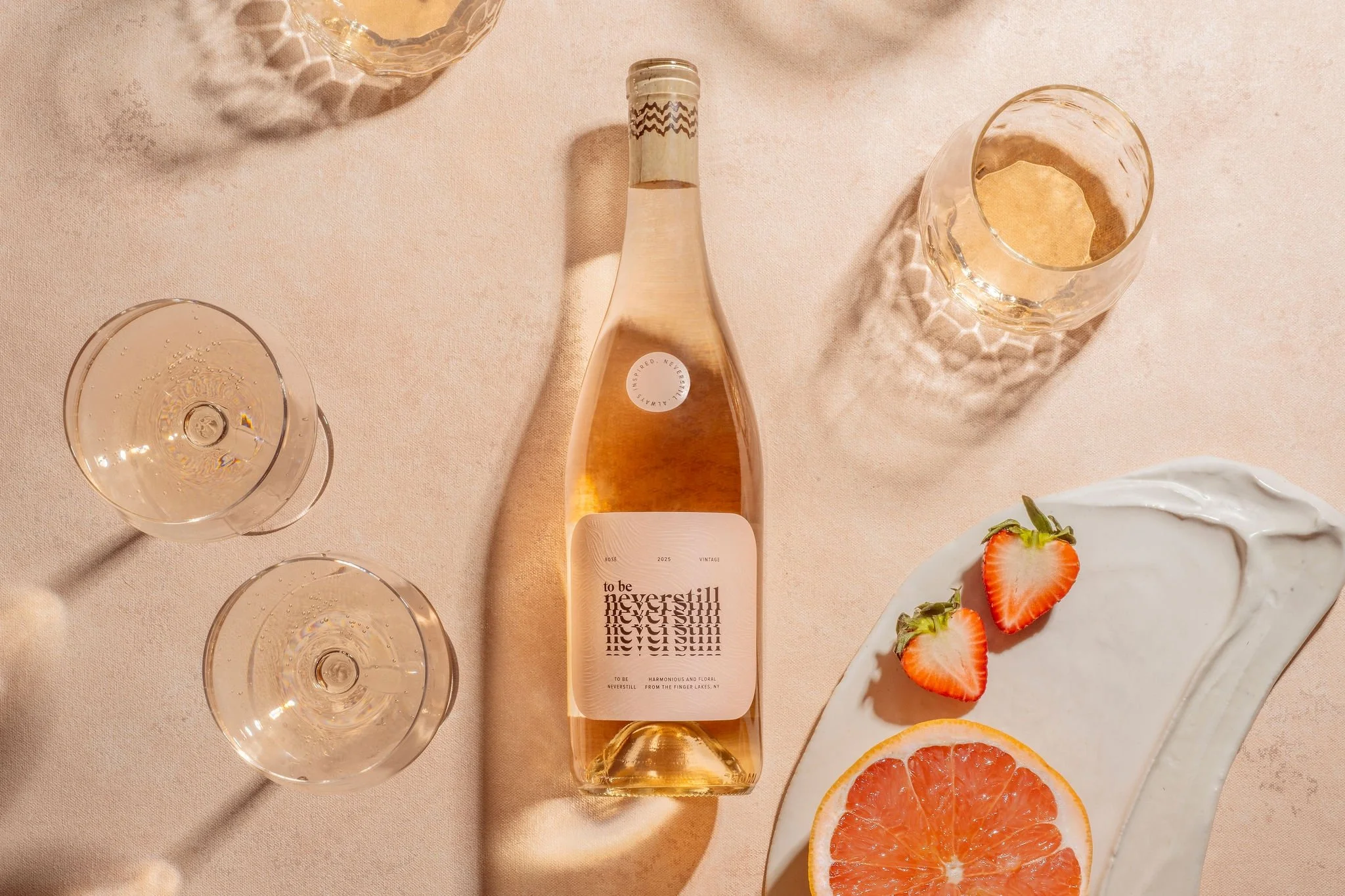
IN DIALOGUE: AGENCY ESTA + CHRISTY COUNTS ON NEVERSTILL WINES
Was there an ‘aha’ moment or a particular glass of wine that sparked your career pivot and vision for Neverstill?
Actually, this was always the plan at this point in my life. Since I was 20, I knew the second chapter of my career would be a pivot into wine. New York as the final home was the 'aha' moment, though – that was not in the original plan, but a really fabulous and exciting pivot.
Neverstill takes its name from the Mohican word for the Hudson River: ‘waters that are never still.’ How does that theme of constant evolution mirror your own path as a founder
Dynamic energy is at my core and an integral part of my personal journey. Constant evolution is a gift in our lives and something I believe we should all celebrate and embrace. 'Waters that are never still' speaks to me from my early days as a child. I am also not alone; this resonates with so many people I admire in this world. We cannot truly embrace this journey of life unless we also embrace constant evolution.
Neverstill is proudly women-led in a notoriously male-dominated space. Was this an intentional?
It wasn’t intentional, I just happened to be born a woman! :)
Sustainability is clearly a core pillar for Neverstill. What’s been the hardest part about staying true to that mission?
Fortunately, many of the sustainable practices are actually less expensive! Lightweight bottles are less expensive than heavy bottles. Not using capsules saves us from that purchase. Corks are an inexpensive way to provide the best closure we can use in wine storage. Those are just a few examples of some of our practices. Thus far, we haven’t found sustainability much of an added expense, which is the good news!

With your 2024 Chenin Blanc at 11.8% ABV, Neverstill is clearly embracing conscious consumption. How do you see the modern consumer’s relationship with wine changing?
We really are perfectly suited for the shift in consumer attitudes. Our wines are exactly what modern consumers are drinking. Our wines are naturally light, fresh, energetic, and lower alcohol. They are local, they are sustainable, and they are crafted with great care in small batches. We are in the right spot at the right time.
You grow your grapes in the Finger Lakes but opened your flagship tasting room in Hudson. What was the vision behind bridging Seneca Lake’s agriculture with the Hudson Valley’s culture?
Hudson is the perfect location to introduce New York wines to weekenders visiting from NYC, New Jersey, and Massachusetts. Many of our visitors have never tried New York wines, and most have never been up to the Finger Lakes. Hudson visitors often come in off the train for the weekend and are looking for memorable weekend activities that introduce them to local treasures. Our tasting room is the ultimate place to relax, unwind, and explore the best New York wines offered.
New York terroir is incredibly distinct. What is it about the Finger Lakes, and specifically your Hidden View vineyard, that produces such expressive, high-acid wines?
On the west side of Seneca Lake, everything kind of lines up in a way that naturally gives us the style of wines we love to make. The vineyards sit on these steep, eastern-facing slopes that get softer morning light, so the fruit ripens slowly and evenly without getting overblown. The soils are really well-draining – lots of shale and gravel – so the vines have to work a bit, which gives us more concentration and that subtle mineral edge. And then there’s the lake itself, which is so deep it acts like a temperature buffer, letting us hang the fruit longer and build flavor without losing that bright acidity. So we’re able to get these beautiful layers – citrus, orchard fruit, even a little tropical note – while still keeping the wines really fresh, energetic, and clean.
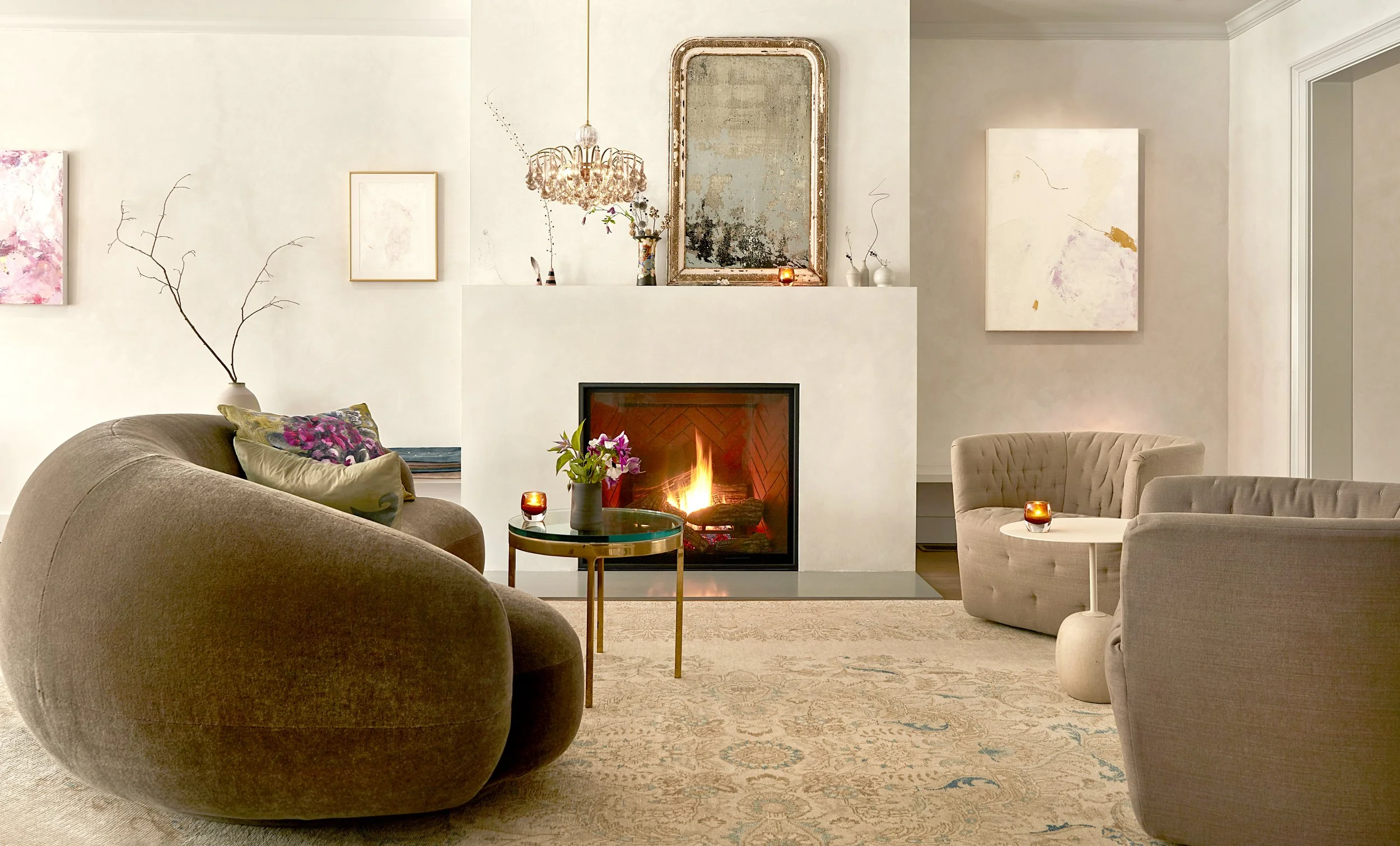
Amy Ilias designed your Hudson tasting room to be beautifully stylized and organic. When guests walk through the doors, how exactly do you want them to feel?
Right from the beginning, my goal was to make every guest feel like they were in our living room, right at home. I want every person to feel warmly welcomed and like they never want to leave. We work really hard to remember each guest, their names, their stories, and their preferences. The interest comes from a genuine place, and I think our guests feel that right from the start.
What has been the most surprising challenge you’ve faced in marketing a boutique New York wine to a broader audience?
In truth, most of the wineries in New York are boutique, small production, and family-owned. So, it is harder to stand out than one may think. Also, the Hudson Valley is filled with small, unique, high-quality brands that are really special. It would probably be easier for us to have launched this in Napa! That is the most surprising challenge for sure. In a sea of outstanding small, talented brands and those that lead them, standing out is hard. So we focus on how we make people feel. Whether it's at our booth in a farmers market or in our tasting room, we strive to make people feel seen, heard, and welcomed.
If the river is ‘never still,’ neither is a successful startup. What does the next major evolution look like for you and Neverstill Wines over the next three to five years?